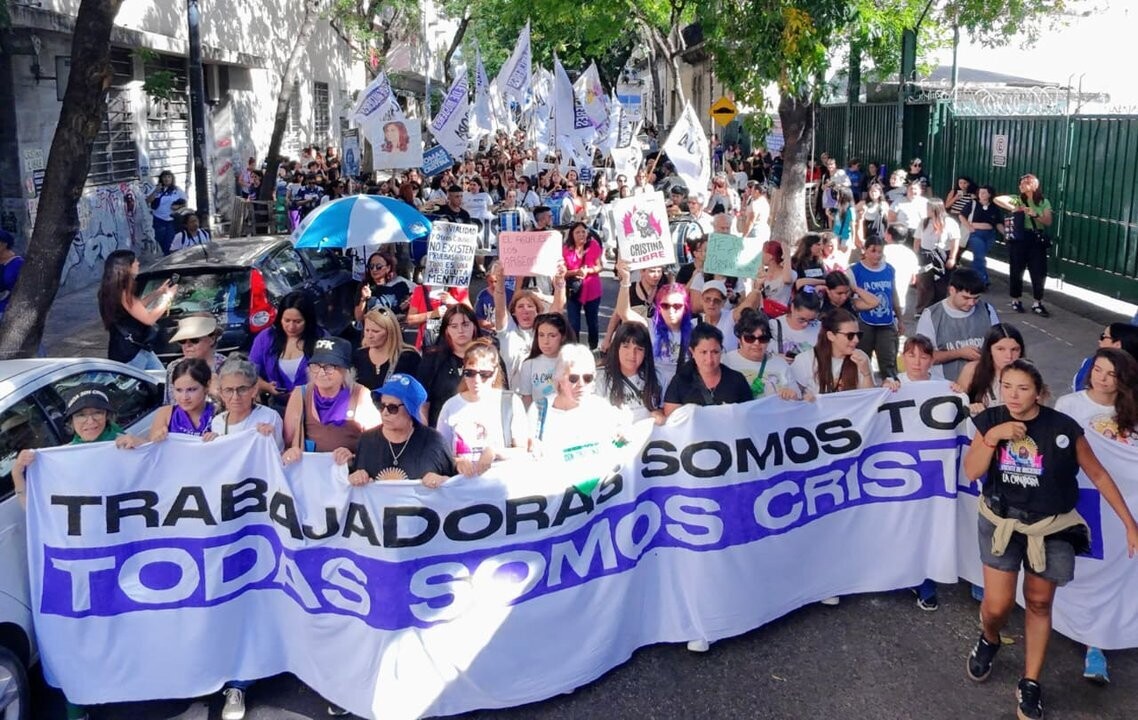
On Monday, March 9, feminist, social, political, and union organizations held a series of demonstrations across the country to commemorate International Working Women's Day and to advocate for the rights of women. The collective 'Ni Una Menos' led the call, joined by the CGT and the two CTAs (of Workers and Autonomous); the left-wing feminist group Pan y Rosas, led by national deputy (FIT) Myriam Bregman; and the National Campaign for the Right to Legal, Safe, and Free Abortion. The decision to move the main march from Sunday, March 8, to Monday, March 9, was made to highlight the issue not only with mobilizations but also with a general strike to demonstrate the importance of women in the economy and society. The main concentration began at the National Congress and marched towards Plaza de Mayo in Buenos Aires at 4:30 PM. The federal day of action was replicated in the provinces of Tucumán, Entre Ríos, and the coastal city of Mar del Plata. The initiative's central goals were the same demands that have been championed for over a decade: the fight against sexist violence, the gender pay gap, labor precariousness, and the defense of existing rights against potential rollbacks by the national government. A group of protesters with La Cámpora flags deviated towards the home of former President Cristina Kirchner, where she is serving house arrest in the Vialidad case, and she came out on the balcony to greet them. According to a report from the MuMaLá (Women of the Latin American Homeland) observatory covering January and February of this year, a femicide is recorded every 39 hours in the country, which is an average of 0.6 deaths per day. Regarding the salary situation, an analysis by the Argentine Center for Political Economy (CEPA) last week indicated that men's incomes exceed women's by 27% to 29%, a gap that widens depending on the job and informal working conditions. In terms of child-rearing, a document published last September by UNICEF's Office of the Situation of Childhood and Adolescence found that 7 out of 10 fathers in Argentina do not comply with child support, and it is the mother who is responsible for the maintenance, education, feeding, and health of the children.